Cas Lester on Children's Television and the Art of Adaptation
Posted on the 26th January, 2026
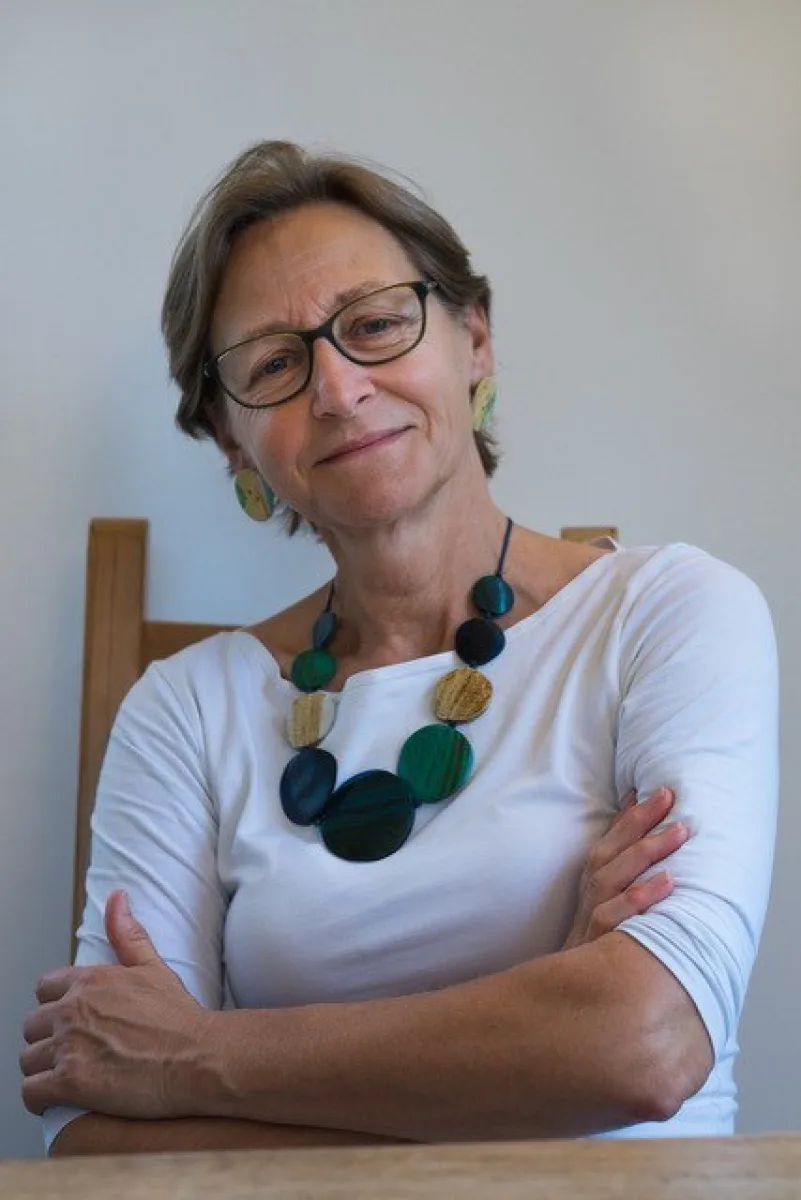
Meet the brilliant Cas Lester — author, producer, children’s champion and storyteller extraordinaire! In this Q&A, Cas shares her insights on what makes children’s television successful, the challenges and joys of adapting beloved books for the screen, and the ways in which screen storytelling can spark imagination and encourage a lifelong engagement with literature. From classic adaptations like The Story of Tracy Beaker to the latest interactive connections between books and TV, Lester offers a thoughtful perspective on the evolving landscape of children’s media.
About Children’s Television
What’s the secret ingredient that makes a children’s TV show successful?
I wish I knew! For children’s drama, it’s simple: a child-centric story with characters the audience can identify with and like at the heart of the action. Diversity and inclusion matter, so as many children as possible see themselves on screen—the CBBC adaptation of Jacqueline Wilson’s The Story of Tracy Beaker is a perfect example. And crucially, child characters need genuine agency, not just adult direction. This can make casting tricky if adult actors feel their roles are too minor.
When you create a show for young viewers, how do you keep it fun and meaningful at the same time?
You start with the meaningful, keep that central, and then find the fun! Any narrative message is usually best delivered sleight-of-hand or obliquely, rather than didactically or ‘on the nose’. A good place to start is to ask how a child viewer will best engage with the message you want to convey; how it will connect with them and their experience. Once you’ve drilled down into that then you can look for the comedy.
Comedy is a great vehicle which speaks to all children, including the child within the adult, but comedy with content is always more lasting and impactful.
What trends are you seeing in children’s TV right now that make you excited for the future?
What’s really encouraging at the moment is seeing so much interaction between screen and books. It used to be one-way: a small number of books adapted for TV or film. Now, we see books inspired by TV shows too. New adventures for classic characters, like Paddington Bear in Peru or The New Famous Five, coexist with picture books spun off series like Bluey, Peppa Pig, and Hey Duggee, alongside adaptations of book-first shows like Bing Bunny, Postman Pat, and Maisy. The relationship between books and screens is reciprocal, and thriving. Long may it last!
On Adapting Children’s Novels for the Screen
When you adapt a book for TV, how do you keep the heart of the story intact while making it work visually?
Well, this can be a challenge! Reading a story lets us imagine the characters and world freely; screen adaptations pin everything down and forces a ruthless reality on the storytelling. Animation or live-action requires the drama to function in a fixed space, with actors physically enacting events. The key is keeping scripts close to the original story while letting the adaptation play to the strengths of visual storytelling: intercutting main and subplots, juxtaposing scenes, and exploiting sound, lighting, music, and effects.
Genre expectations can complicate things. A movie might demand a three-act structure, a series might need cliffhangers—neither necessarily present in the book. Time constraints for child actors often mean trimming main storylines and introducing new subplots.
Are there moments from the books that translated even better on screen than you expected?
One moment that immediately springs to my mind is the opening scene of the first episode of The Story of Tracy Beaker. This is where Tracy storms back into the Dumping Ground, in a full-on outrageous rant, because her fostering placement has failed. In the book, the scene appears on around page 30. Opening the first episode with the scene made the drama more impactful and immediately established the extraordinary character of Tracy from the first moment the audience first saw her.
What’s the biggest challenge—shrinking a whole world onto a screen, or choosing which beloved scenes you simply can’t leave out?
Well, in terms of cutting scenes it might be helpful to point out that there is a difference between adapting a book as a one-off drama or a film, where you might need to make cuts to the story, as opposed to making a long running series from a book where you are likely to need more story material rather than less. The original book of The Story of Tracy Beaker is only 136 pages long and the story material only spread to six episodes, yet we made 26 episodes, followed by several more series. So a huge volume of new story was invented. We were extremely lucky in that Jacqueline Wilson was happy to be involved in the development of additional story lines and characters.
In contrast to this ‘beloved scenes’ often have to be left out of movie adaptations of books. The first to go are those that aren’t absolutely essential to the central story. There have been several movies and a couple of TV series based on Kenneth Graham’s The Wind in the Willows, but I don’t think any of them have ever included the whole of the book. There are entire events and chapters which come as quite a surprise if you read the book after watching a screen adaptation!
When it comes to portraying ‘a whole world on a screen’, for children’s television in particular, this is very often an impossible budgetary challenge. The BBC’s children’s drama department made the Lion, the Witch and the Wardrobe as a six part Sunday serial, aimed at a family audience in 1988. It would now be prohibitively expensive to do that on a children’s television budget. His Dark Materials, based on Phillip Pullman’s books, which aired on BBC One in 2019, was not made on a children’s TV budget. The show was commissioned by BBC One, with a primetime budget and co-production money from New Line Cinema and HBO. One obvious point, but still worth making, is that even the largest domestic television screen is way smaller than a cinema screen. So in terms of portraying a world, cinema excels at offering a huge width of scale, epic landscapes, the vase sweep of space, whereas television is perhaps better at delivering depth and layers in a picture, which creates intimacy. Either way, neither of these screens can match the scale of a child’s imagination!
Do you involve young readers or schools in the adaptation process to see what sparks their imagination?
Not during production—budgets rarely allow pilots—but audience reactions are closely monitored.
Having said that, unusually, a large number of children were invited to the launch of the first series of Junior Jackanory (which included Roald Dahl’s The Enormous Crocodile, and Rastamouse by Michael de Souza and Genevieve Webster) and the Jackanory Specials (Muddle Earth by Paul Stewart and Chris Riddell, and The Magician of Samarkand by Alan Temperly) at BBC Television Centre. This gave us a great opportunity to watch the young audience’s reaction to the shows.
Encouraging Reading for Pleasure
What role do you think TV can play in rebuilding or strengthening a culture of reading among young people?
TV is already playing a significant role in developing a culture of reading in young people, and not just by screening book adaptations, which undoubtedly encourage the audience to read those books. There is a long tradition of shows where presenters read stories directly to the audience (Jackanory, CBeebies Bedtime Story, Bookaboo) and a growing stream of books based on TV series, especially picture books, which are very often a child’s first introduction to reading.
Additionally, in a world where children are bombarded with an overwhelming quantity of digital narrative I think familiarity is the single most useful tool to exploit when it comes to encouraging them to pick up a book. Ask any librarian and they’ll tell you how much children are drawn to stories and characters they recognise from TV and film. Books by Enid Blyton, Jacqueline Wilson, Michael Bond, JK Rowling, have benefited enormously from screen exposure, but screen adaptations also introduce children to writers not so well-known, such as Andy Griffiths (the Treehouse series) and Julie Sykes (Unicorn Academy).
As adults we are drawn to familiarity too. It’s no co-incidence Jenny Agutter was cast in two movie versions of The Railway Children, but 30 years apart!
What advice would you give parents who want to use their children’s favourite shows as a gateway into reading?
Let children choose books for pleasure. Watch their favourite shows with them, and understand why they love them. That insight will help you match books with similar characters, genres, or story territory. Never force reading—it kills curiosity.
Lastly—tell us the children’s book that first made you fall in love with stories.
Winnie the Pooh—and its companion The House at Pooh Corner. Those characters are lifelong friends; the One Hundred Acre Wood is a place I want to live forever. As an older reader, The Dark is Rising (Susan Cooper) and The Owl Service (Alan Garner) instilled a love of fantasy folk fiction. Interestingly, Granada TV’s The Owl Service (1969) introduced me to Garner’s books as a child.
Television has shaped my taste: I adore visually vivid storytelling. Frances Hardinge’s The Forest of a Thousand Eyes (illustrated by Emily Gravett) is a dream for animation, and Katherine Rundell’s books are brilliant; I eagerly await Disney’s adaptation of her Impossible Creatures series.
About Cas Lester
Cas Lester is an author, award-winning TV producer, and children’s reading champion.
She spent 25 years working for BBC Children’s television. As Head of CBBC Drama Development her CBBC credits include: The Story of Tracy Beaker, Kerching!, Jackanory and Big Kids.
Her children’s books have been translated into five languages and her titles include the comedy sci-fi series featuring Harvey Drew and the Bin Men from Outer Space, the Nixie the Bad, Bad Fairy books, and Do You Speak Chocolate?
She’s regularly appeared at several Literary Festivals including Bath, Cheltenham, Chipping Norton and Bookfeast.
As a children’s author she was also Patron of Reading for two Oxfordshire primary schools.
She has written two women’s books, After the One and The One After the One and now, indulging her love of fantasy folk fiction, she has moved to the dark side and writes Folk Horror for adults! Cas lives in Oxfordshire.