Children’s Books, Representation and Belonging
Posted on the 26th June, 2026
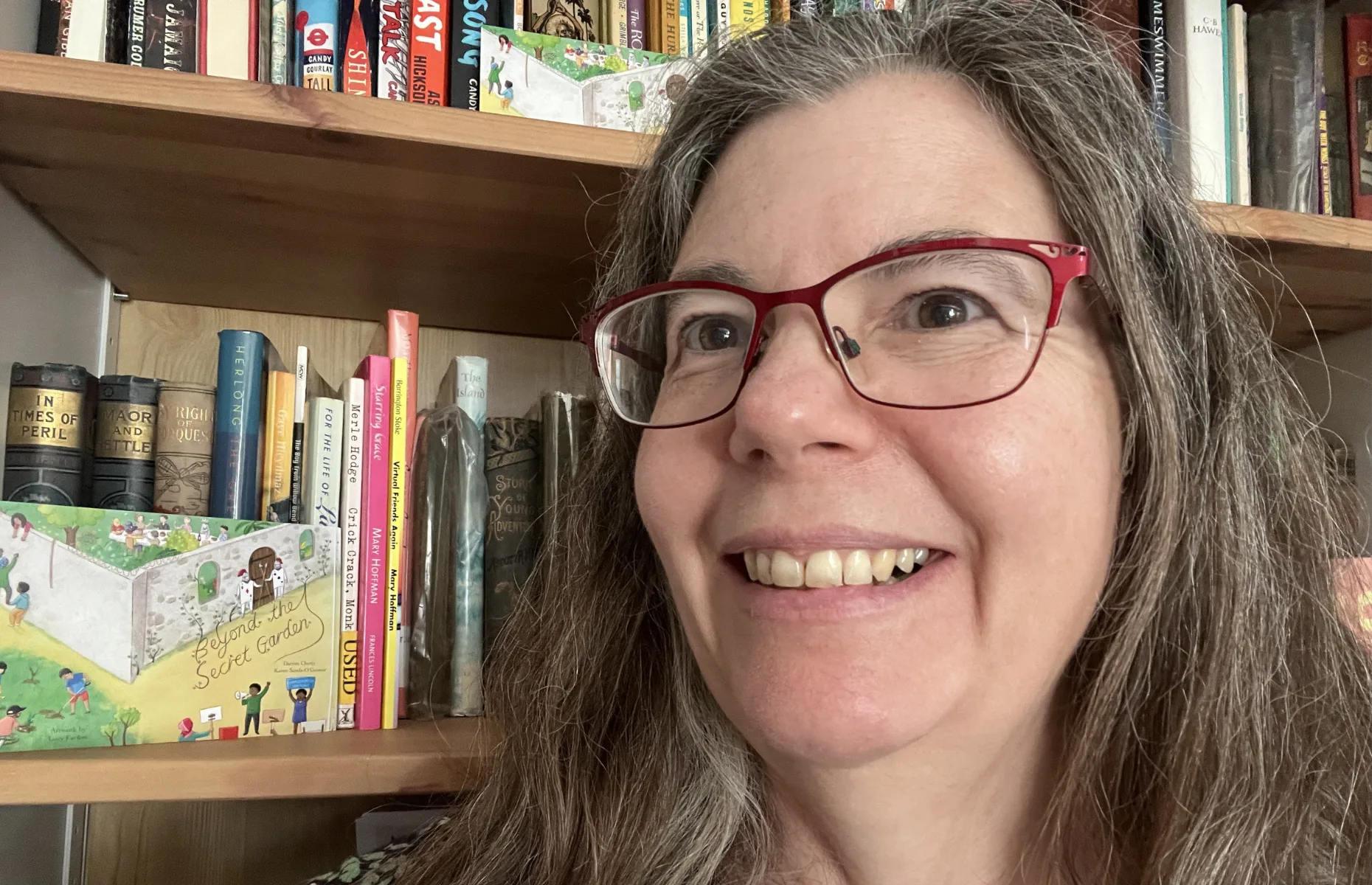
Professor Karen Sands-O’Connor shares practical advice for parents and carers on choosing inclusive children’s books, talking about representation and difference, and helping young readers develop curiosity, empathy and confidence. From selecting stories that reflect a wide range of experiences to navigating tricky conversations, she offers simple ways families can make reading a more open and thoughtful experience.
Professor Sands-O’Connor is a leading expert of children’s literature, whose research explores representation, diversity and the ways stories shape young readers’ understanding of the world. She is Professor of Children’s Literature at University of Sheffield and has written extensively on Black children’s literature, publishing and cultural representation. Through her work, she highlights the importance of children seeing a wide range of experiences reflected in books — from everyday family life and adventure to history, imagination and joy.
Why does representation in children’s books matter so much in early childhood?
Children are learning about the world around them from a very young age. They begin with family, then gradually expand outward to nursery, school, shops, doctors and dentists. In all of these places, they will encounter people who are different from themselves. Seeing those people in books gives children the opportunity to ask questions and make connections. They might say, “I know somebody who looks like that,” or “I know somebody who does that job.” Representation is about many different things.
One reason representation matters in children’s books is that books for younger readers often present a positive world. We tend to see much more positive representation in books for younger children than we do in books for older readers. Children are therefore more likely to encounter, for example, a Black nurse or doctor in a picture book. That’s important because it helps them understand that anyone can be a professional, even if they do not see that reflected in their own lives.
Many parents grew up with classic children’s books that contain problematic racial stereotypes. Should families avoid these books entirely? Is there value in reading them critically, or are some stories better left on the shelf? How can parents make those decisions?
This is a tricky question and one that makes a lot of parents worry about using books with representation. My immediate response is: don’t worry. Talking about representation is not meant to dictate a different way of doing things. It’s not meant to tell you that you are bad or wrong, or that your parents, who may have chosen those books for you, were bad or wrong. It’s about thinking about what you’re doing.
First, think about the age of the child. I’ll give you an example from my own life. My daughter and I read together right through high school. We both chose books, and one of the books she picked was Oliver Twist after we had watched a BBC adaptation.
We weren’t ten pages in before she asked, “Why do they keep calling Fagin ‘the Jew’?”
So I said, “Okay, let’s have a conversation about antisemitism and past attitudes.” She was ten years old, and I knew we could have that conversation because she had asked the question.
When a child is old enough to ask, they are old enough to receive a reasonable explanation.
Sometimes, though, there are books you may not want to share with very young children. Little Black Sambo (written by Helen Bannerman 1899), for example, contains very negative racial stereotypes, particularly in the illustrations. Explaining why a woman living in India created those images is complicated and involves a great deal of history. Young children may understand that the pictures are problematic, but they do not necessarily have the grasp of history needed to understand why they were created in the first place.
Ultimately, it’s about thinking about the child as well as thinking about yourself.
If a child encounters racist imagery or stereotypes in a book, how should a parent respond? What are some age-appropriate ways to start conversations about prejudice, exclusion or harmful representation without overwhelming young readers?
There are really two scenarios. The first is when the child initiates the conversation. In some ways, that’s easier. You may worry about saying the wrong thing, but you know the child is curious and you want to help them understand.
The second scenario is when you are reading together, the child encounters racial stereotypes and they don’t react. Many parents, educators and carers are afraid to say anything because they don’t want to create an issue.
What you can do in that situation, especially with picture books, is pause and ask, “Is there anything you notice on this page? Do you have any questions about this page?”
Perhaps the child has noticed something but doesn’t feel comfortable asking about it. They may not even see the same things you do. In that case, you can say, “There’s something on this page that bothers me and I’d like to talk about it with you.”
You don’t have to close the book unless the child says they no longer want to read it. Hearing an adult say, “There’s something here that bothers me,” gives children permission to say the same when something troubles them.
Parents often want to diversify their child’s bookshelf but worry about getting it wrong. What’s a good place to start? Are there simple signs parents can look for when choosing inclusive, authentic stories featuring Black characters and families?
The most important thing is to be aware and not simply pull a book off the shelf and start reading it immediately. If you are worried about getting it wrong, one of the best things you can do is read the book yourself first.
If you have time, find out something about the author. Why are they writing this story? Do they come from that community? That doesn’t guarantee they will get everything right, but it does mean they have some experience. Perhaps they are a community librarian who has spent a great deal of time within that community. An author does not have to belong to a community to write about it, but it helps. At the very least, authors should have done research or have lived experience, and ideally both.
Another thing to look for in picture books is whether the book has genuine connections to the child’s community rather than simply colouring in brown faces. Sometimes this can be something as simple as a map of Jamaica in Tony Bradman and Eileen Browne’s books about a little girl named Jo, beginning with In a Minute. In Nathan Byron and Dapo Adeloa’s Look Up!, Rocket’s mother is brushing her daughter’s hair in a way that is appropriate for African hair. It is never mentioned in the text, but it appears in the illustrations and shows an understanding of the community being represented.
How can parents move beyond issue books and make diversity feel like a natural part of everyday reading? Why is it important for children to see Black characters experiencing joy, adventure, humour, fantasy and ordinary family life, not only stories about racism or struggle?
Every community experiences every emotion, every joy and every aspect of life. What we want to show children is a broad picture. I do think children should encounter issue books, although most books are issue books in some way.
For example, Zeki Can Swim (by Anna McQuinn, and illustrated by Ruth Hearson), appears to be a book about swimming lessons, something that many children experience. I live by the coast, so I think learning to swim is important. Historically, however, Black communities have often been stereotyped as non-swimmers, and there are historical reasons for that. This book allows Black children to see themselves as swimmers. It connects everyday experiences with a history of absence, even though it is not directly a book about racism.
There are also many books that simply deal with ordinary experiences. I was recently working on romance in books for older readers, and for a long time it was difficult to find books about Black girls experiencing romance in the same way that white characters did. There were books about interracial relationships that ended in misery and disaster, but there were very few stories that simply said, “I’m a girl, I have a romance and I also happen to be Black.”
These things matter because most people do not want to live lives defined by struggle and misery. Most people have ordinary lives and should see that ordinariness reflected in books, alongside magic, mystery and adventure.
What role do illustrations play in representation? Are there visual stereotypes or patterns in children’s publishing that parents should be aware of when selecting books?
Illustrations play a significant role, particularly for younger readers, although increasingly for older readers as well. They communicate where children belong.
During the 1970s and early 1980s there was a strong push towards multiculturalism. Much of it was well-intentioned and produced some positive results, but it often centred white children. The message became one of helping white children become comfortable with diversity, and illustrations frequently reinforced this by placing white children at the centre of the picture.
One example is Charley, Charlotte and the Golden Canary by Charles Keeping, a beautifully illustrated book. It tells the story of Charlotte, a white girl, and Charley, a Black boy, who live in slums due to be demolished. Charlotte moves to a new tower block, which at the time was viewed positively. The illustrations literally make the building shine, and Charlotte occupies the highest position within it. The images suggest that whiteness is somehow preferable and that it is the white child who receives the rewards of the world.
When looking at illustrations, parents should consider whether children from different backgrounds are being placed at the centre of the action or left standing at the edges. Are they participating and showing agency, or are they simply side characters?
For older readers, cover illustrations are particularly important. Covers can communicate action, independence and participation in ways that show characters as active protagonists rather than sidekicks.
Some parents say, “My child doesn’t notice race.” What would you say to that? How early do children begin absorbing ideas about difference and identity, and what responsibility do adults have in shaping those conversations?
When parents say, “My child doesn’t notice race,” what they are usually saying is, “My child doesn’t notice racism.”
Children notice difference from birth. Otherwise, they would not recognise that one person is their mother and another is their sister. Everyone notices differences. The question is not whether children notice difference, but whether they see difference as a problem.
My daughter came home from nursery when she was eighteen months old and said, “The kids said I’m black, but I’m not. I’m brown.” Those children had already begun to understand racial distinctions. They were not being mean, and my daughter did not experience it as hurtful, but she needed me to explain what they meant.
Parents need to think about how children of colour experience race. If a child grows up in a multiracial community and has friends from different backgrounds, it is important to talk openly about how experiences differ. Those conversations do not have to focus on negative experiences. Food, for example, is an easy place to start. Asking, “What do they have for dinner?” is simply a question about difference.
Encouraging children to ask questions and hearing adults ask questions helps them appreciate difference rather than see it as a problem. These conversations do not have to be frightening discussions about racism. They can simply be conversations about difference and appreciation.
Have you noticed meaningful progress in the representation of Black people in children’s publishing in recent years? Where are things improving, and where do significant gaps remain?
Thanks to the annual Reflecting Realities reports produced by the Centre for Literacy in Primary Education, there has been significant progress. When the reports began almost ten years ago, the statistics were dire. Only one per cent of children’s books published that year featured a main character from a racially minoritised background. Those figures have improved considerably. The reports were designed to encourage publishers - the stories already existed, but they were not always being published. They also highlighted areas where gaps remained.
One genre that has improved dramatically is mystery. When the reports began, there were very few racially minoritised detectives or protagonists. Today there are British Asian detectives, Black girl detectives and historical mysteries featuring diverse characters. That growth has been remarkable.
However, stories featuring British Arab children remain significantly underrepresented. Although British Arab communities are not large, the number of books featuring Arab characters remains very small, with perhaps only one or two published each year. Some groups are still viewed as insufficiently marketable.
Another issue is keeping books in print. When I have taught Black British children’s literature at university, it has often been difficult to assign classic texts because they are no longer available. Books by authors from racially minoritised backgrounds frequently disappear after five years. While this happens to many books, if only books by white authors remain in print because they are considered marketable, it becomes difficult to see a history.
I was delighted when Errol Lloyd’s Nini at Carnival was republished after fifty years. It allows a new generation of children to experience the joy of a West Indian cultural event and reminds readers that Black British people have been part of British culture for a long time. At a time when we often hear narratives suggesting that these communities do not belong, children’s books can help preserve and communicate that history.
If you could encourage parents to adopt one reading habit at home to help raise more thoughtful, inclusive readers, what would it be? What small practical changes can families make that genuinely broaden children’s understanding of the world?
If I had to choose just one thing, I would say: leave room for questions and ask questions yourself.
That is how we develop people who think for themselves. Children need to feel that their questions and their ways of thinking about books are valued. As parents, we help guide those conversations, and we will get things wrong sometimes. That is perfectly normal.
A reading culture should not be one-way, where the parent says, “Here is the book,” and once it is finished, it is closed and put away. Reading should be a conversation. Children should be encouraged to ask questions, whether they are about race or simply about what is happening in the story.
By valuing their voices and teaching them to listen to others, we help children become thoughtful readers and thoughtful people.
What children’s books featuring Black characters or creators do you find yourself recommending again and again to families, and why?
I usually divide recommendations by age, although I always find that difficult because I read across all age groups.
For picture books, I often recommend Anna McQuinn’s books about everyday experiences. Her two main characters, Zeki and his older sister Lulu, experience all kinds of ordinary events. These books allow children to see themselves and others in familiar situations.
I also admire the work of Joseph Coelho and Lanisha Butterfield, both of whom write positively and imaginatively about tower blocks and communities. Their books remind children that communities are made by people, not buildings, and that people can shape and improve the spaces around them.
I frequently recommend Look Up! by Nathan Bryon and Dapo Adeola, as well as Astro Girl by Ken Wilson-Max. Both are books about girls and space, but they are visually and stylistically very different. Children should encounter a range of artistic styles as well as a range of stories, and these books complement one another beautifully.
For older readers, Malorie Blackman and Patrice Lawrence are authors I return to again and again. Both have written across the full spectrum of children’s literature, from picture books to young adult novels, tackling themes including family, care experiences and sexuality. They are writers that young readers can grow up with.
I also have a particular fondness for historical fiction and often recommend J. T. Williams’s Lizzie and Belle Mysteries. Some historians are uncomfortable with aspects of the books because they are not strictly historically accurate. Lizzie and Belle were real people, and some events in the novels are fictionalised. However, I think it is valuable for children from racially minoritised backgrounds to see themselves taking action and making a difference in history.
I feel similarly about books such as Safiyyah’s War by Hiba Noor Khan. While I have some reservations about certain aspects of the book, it places a child at the centre of history and allows them to make a meaningful difference in their world.
That, ultimately, is what children’s books should do. They should help young readers imagine themselves making a meaningful difference in the world.